Reefton Goldfield

About the Project

Reefton Goldfield

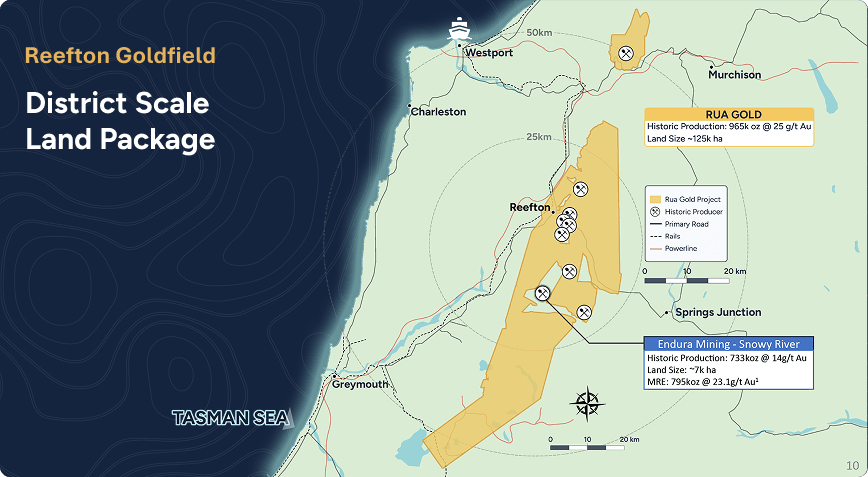
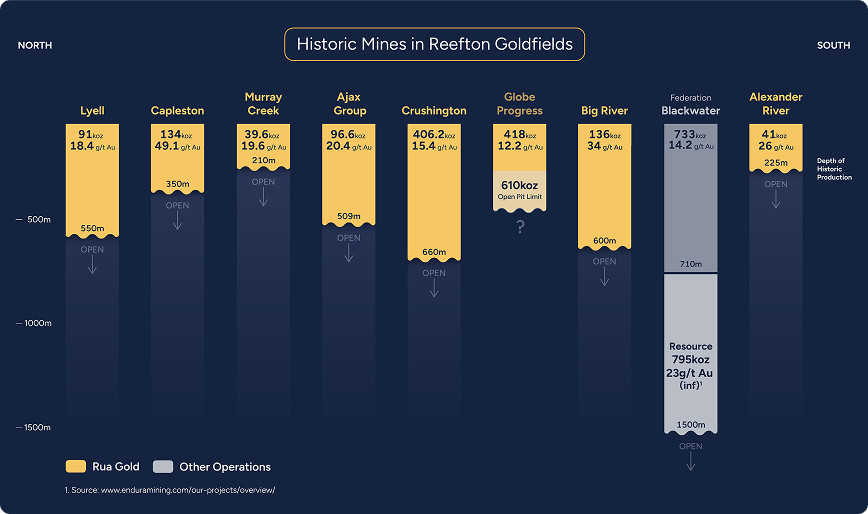
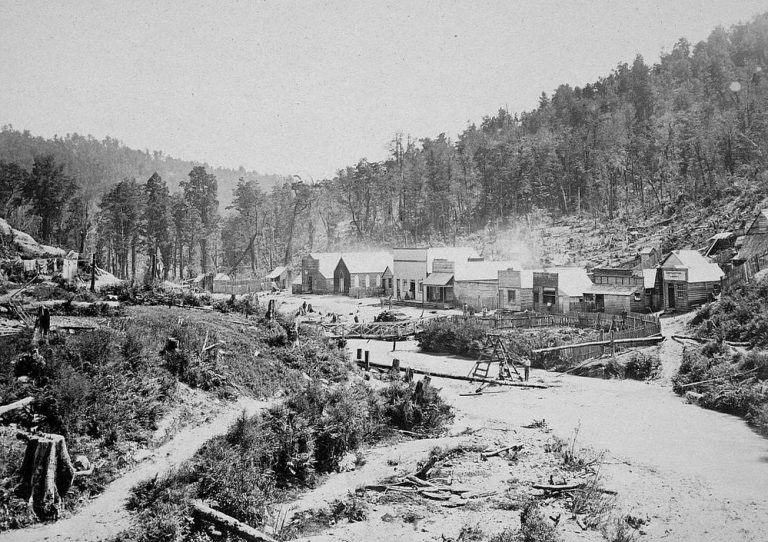
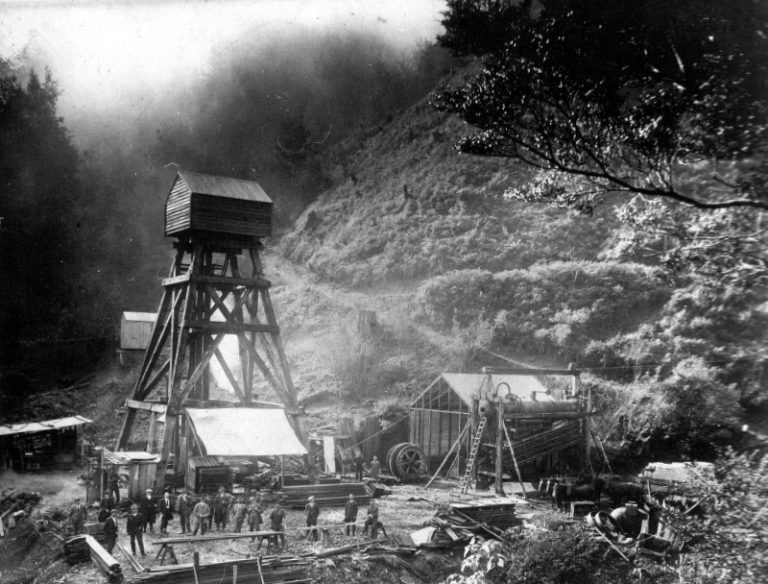
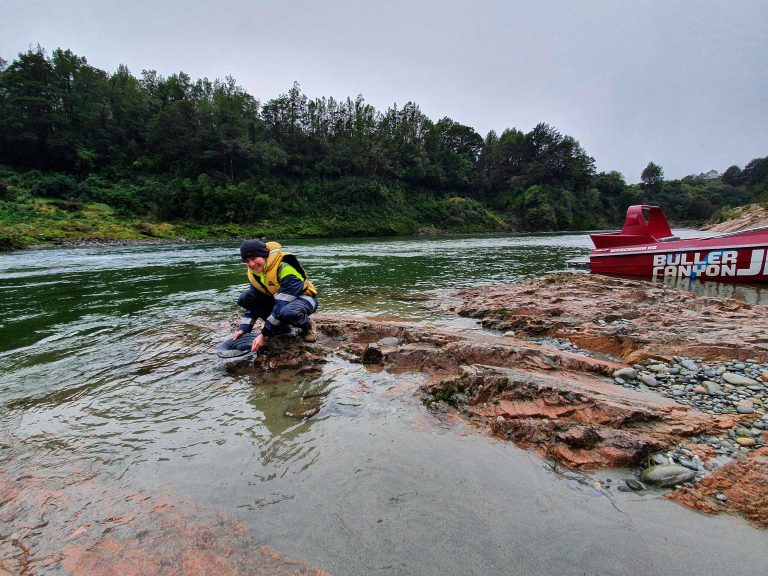
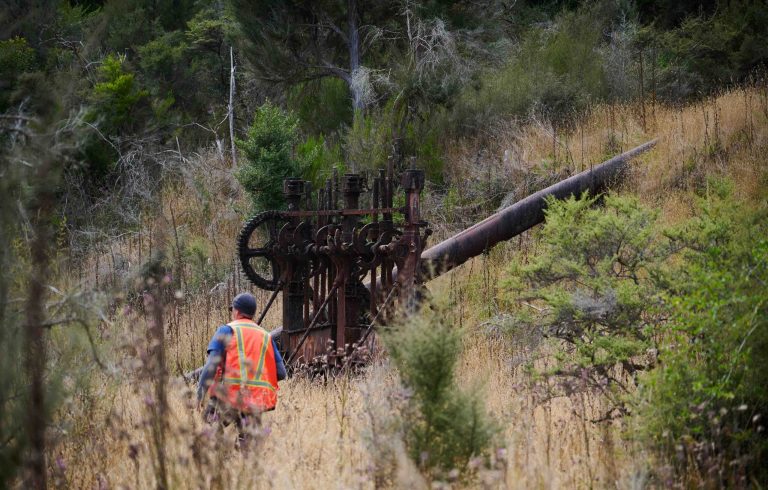
Historical mining in the Reefton Goldfield started in 1872, and by its close, had produced 2 million ounces of gold from high-grade underground operations in orogenic quartz vein systems. In 1951 the shaft of the Blackwater mine at Waiuta collapsed, having reached a depth of 700 metres. Today Federation Mining is reopening this mine with new underground drives restarting where mining earlier ceased.

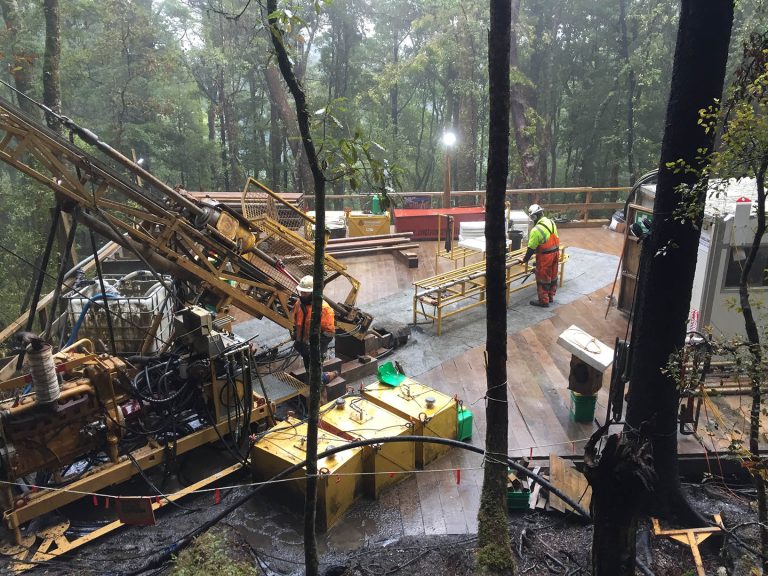
RUA GOLD holds 95% of the tenements in this district and is currently aggressively drilling multiple targets across the land package. 

Highlights

Geology

Orogenic gold deposits are among the highest gold-grade deposits in the world

History

The Reefton Goldfield has produced 2 Moz gold at 9-50 g/t Au

Potential at Depth

Historic mines are untested at further depths than they mined in the 1950's 

Agressive Drill Program

Drilling Towards Development 

3 rigs currently turning 

Scale

95%

Of Reefton Tenements

IMMEDIATE CATALYST

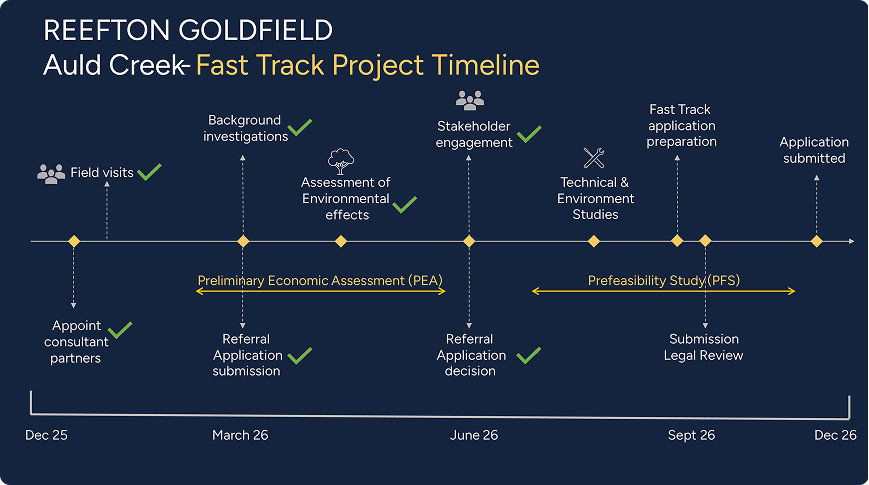
Ongoing exploration results, resource refresh and commencement of studies and fast track permitting

Active Neighbouring Mine

Endura Mining​

(ex- Federation)

US$30M purchase

from OceanaGold

Raised +A$400M ​

With Aus Super and Orion

+795k oz

Inferred resource1
Under construction with first gold planned for end of 2026

1. Source: www.enduramining.com/our-projects/overview/

Regional Geology

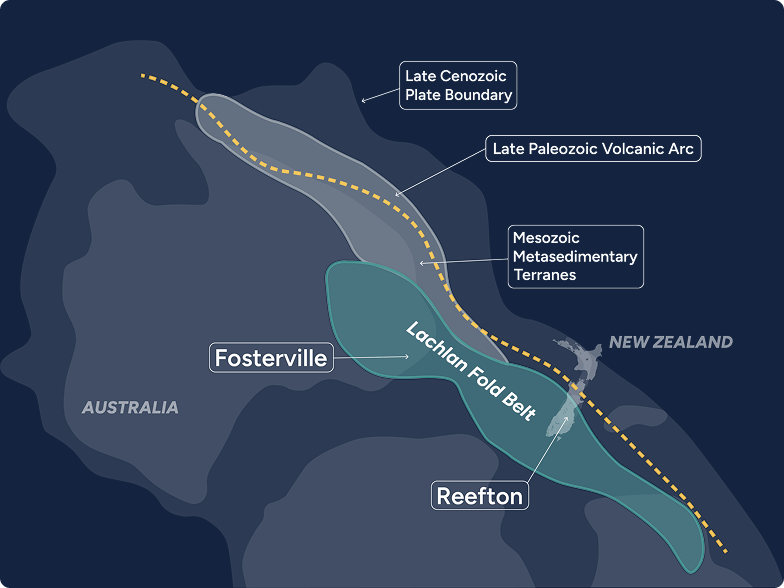
The Reefton Goldfield is hosted entirely within Ordovician-age rocks of the Greenland Group, comprising greenschist facies metamorphosed alternating strata of greywacke and argillite sedimentary rocks. In the Reefton area, the Greenland Group forms a ~35km long by 15km wide north-northeast trending belt of rocks, bounded to the north and east by granitic plutons of the Karamea, Rahu, and Separation Point batholiths. The southern and western margins of the Greenland Group are typically obscured by Tertiary sediments and Quaternary gravels (Nathan et al., 2022). The gold-bearing Greenland Group in New Zealand was once contiguous with the Lachlan Fold Belt in Victoria, Australia, which hosts the Ballarat-Bendigo Goldfield, and the Fosterville mine (see map below).

Mineralization

The Reefton Goldfield hosts orogenic gold mineralisation and deposits. The main Au mineralisation event occurred during the latter stages of greenschist facies metamorphism of Greenland Group rocks, ~450 million years and 387 Myrs BP. Compression resulted in regional-scale folds, and as the folds tightened, fluids were focused along shears. Early Au-bearing quartz veins were emplaced into the shears. The quartz vein textures, elemental associations (Au-As-Sb), approximate depth of emplacement (near the brittle-ductile transition), tectonic setting and relative timing (late metamorphic with a post-metamorphic overprint; temporally unrelated to any intrusive event) are characteristics typical of other Phanerozoic orogenic Au deposits around the world.

Project Overview

Historical Mining: Caledonian Mine returned some of the highest grades in the district on initial mining. “The first crushing yielded at the rate of 9oz. per ton, but subsequent crushing’s were poorer, reducing the average of the ore from the mine to about 4oz. per ton”. Henderson 1917 Geology and mineral resources of the Reefton Subdivision Caledonia production totalled 1,160.6oz gold at 25.3g/t Au, adjacent Larrys Mine recorded 4128.2oz production at 16.8g/t Au (Barry 1993).

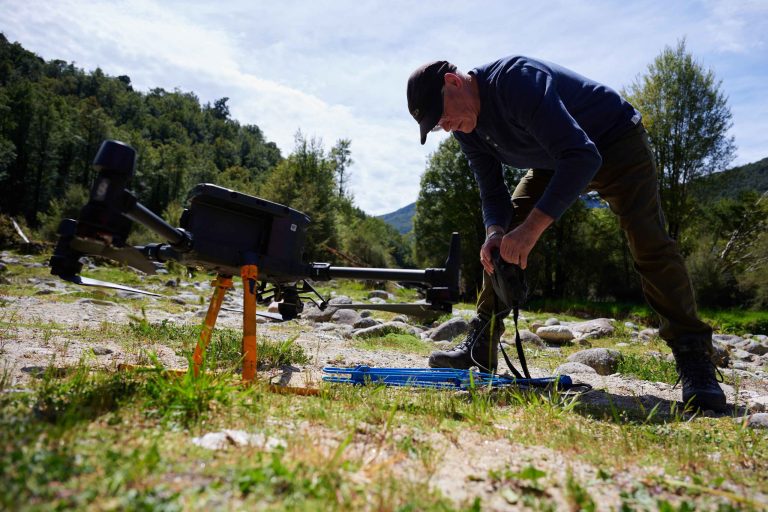
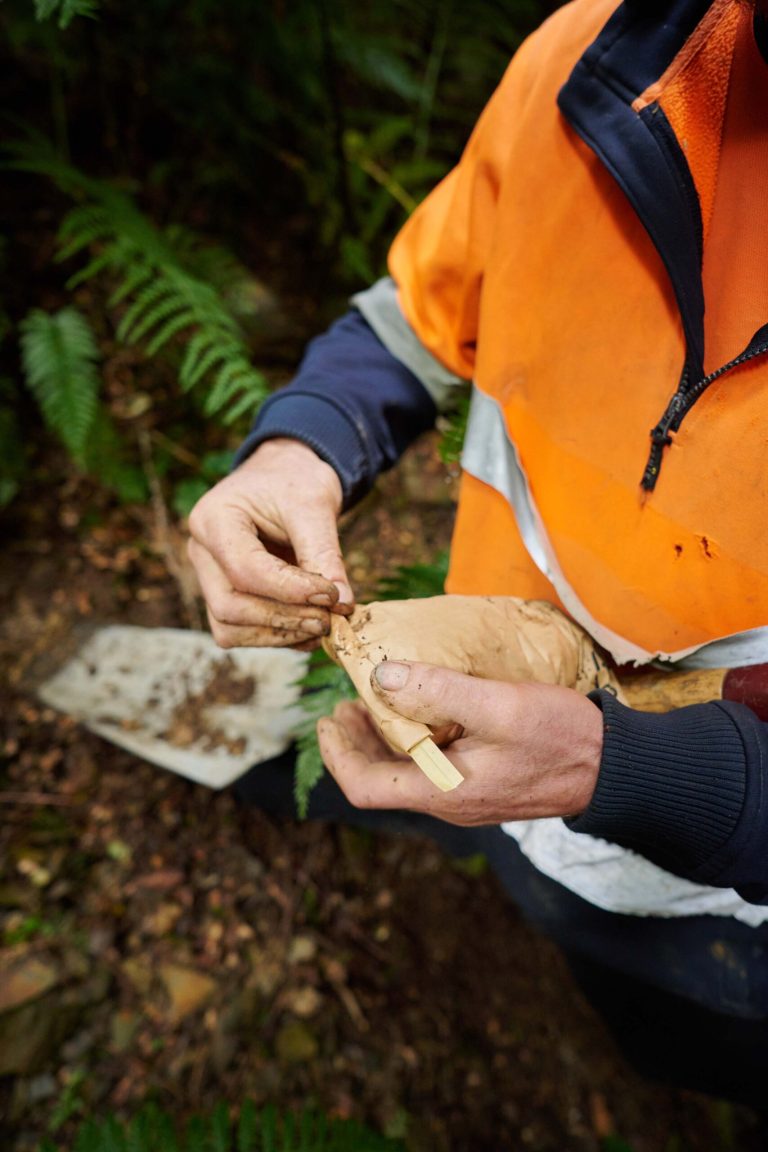
Rock sampling conducted in December 2023 returned grades of 3oz (93g/t) Au from near-insitu rocks collected during the soil sampling program, ~700 m south of the historical Caledonia-Larrys workings. Soil sampling, UAV magnetic surveys and detailed mapping is planned to inform scout drilling.

The Raglan area lies immediately north of the historical Capleston mine trend (Reform-Fiery Cross-Welcome Hopeful-Specimen Hill mines).  Sampling has returned up to 149ppb gold in soils 2km north of Specimen Hill, detailed mapping is ongoing.

Historical production of 136.1koz Au produced @ 30.2g/t Au
Greenfields Discovery: Pactolus
  • 16.4g/t gold over 7m in surface channel sampling
  • Significant intercepts in 12 drill holes
  • DDH PAC 004 8.3 m @ 7.7g/t Au, including 4m @ 12.3g/t Au

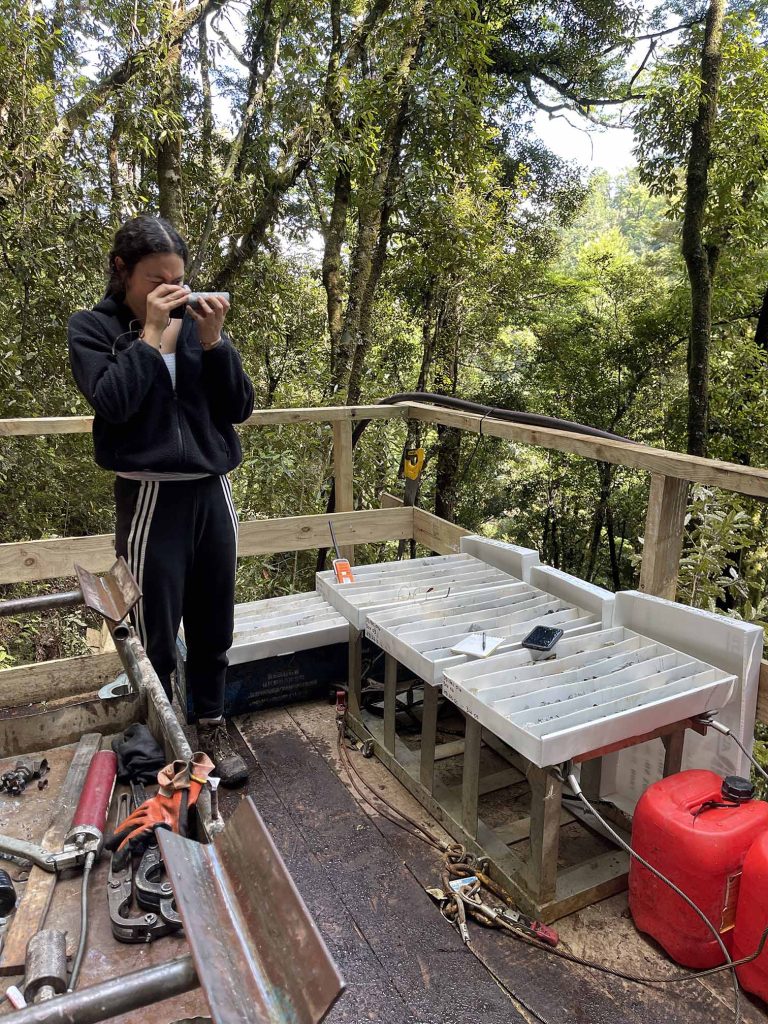
Overview: Drilling is currently underway on the Pactolus vein, a greenfield discovery that has significant drill intercepts and a robust geological model to support further exploration.

Historical mines in the district are clustered along predominantly north trending shear and fault zones that cut across areas of intense folding. Quartz veins are typically discordant to bedding and strike parallel to axial surfaces of regional scale north plunging faults. Exploration conducted by RUA GOLD demonstrates potential extensions to mined lodes (most historical workings were mined to less than 200–300m vertically) and the possibility of repeated lode-bearing structures immediately adjacent to historical workings.

Historical Production of 39.7koz Au produced @ 19.57g/t Au

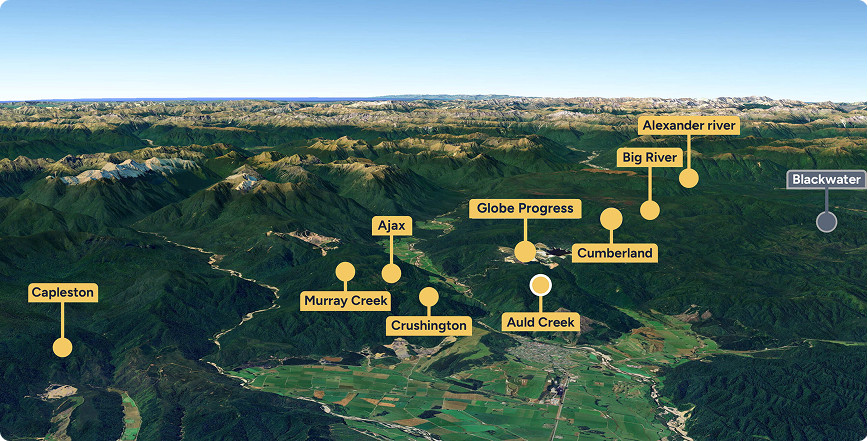
Overview: The Murray Creek area hosts the historical Victoria, Inglewood, Phoenix, and Golden Treasure mines; an area that has compelling evidence of potential to develop at depth or along strike of the mined lode structures.

Key targets are Golden Treasure and Atalanta. 

Golden Treasure: Outcropping quartz veins up to 3m in width and mappable over a length on surface, this vein system can be followed for approximately 900m. Unique in its very high antimony content (up to 30% stibnite by volume) this deposit was only modestly exploited. Drilling by RUA GOLD in 2022 intersected old mine workings and did not test depth or northerly projections of the system. Further 3D modelling and drilling is planned.

Atalanta: presents a new target. Based on As-Au soil geochemical anomalism and 2D structural mapping, following careful re-examination of the surface geochemistry to rule out historical mine contamination; lode modelling and 400 m of diamond drilling is proposed.

Historical Production of 96.7koz Au produced @ 20.36g/t Au

Overview: The Ajax area is host to the historical Golden Fleece, Ajax, Royal and Venus historical workings

Key target is Golden Fleece  

Golden Fleece: The Golden Fleece mine presents as a coherent series of plunging lode, along anticline, fault intersections. Extensions and replications based on 2D structural and Au-As soil geochemical data, extending at depth to the north and replicating on east and west sides, are interpreted. Precision surveying (to pinpoint old workings) and detailed geological mapping of historical workings was competed in 2023.  Incorporation of this mapping, very recent extensive gold soil geochemistry, the ultra-detailed UAV Magnetics is being included into a camp scale 3D Modelling and drill targeting contract which is currently underway.

Historic Production of 406koz Au produced @ 15.44g/t Au

Overview: The historical Crushington area was host to a string of mines, being a series of lodes structures and offsets along the Waitahu syncline hinge. These cumulatively represent the largest single producers of gold in RUA GOLD’s title holding. This major structure and its historical mining all fall into the 3D Modelling Project.

Targets represent north and/or east extensions of the Crushington mined lodes. Accurate 3D reconstruction of the historical lodes, combined with ultra-detailed magnetic surveys and southerly extension of RUA GOLD’s soil surface geochemistry where up to 14,458 ppm As in soils and 73.2 ppm Au in rock samples just completed provide additional targeting details for these near mine targets.

Regional exploration has a number of greenfield gold anomalies show genuine encouragement:

Stony Creek: 1km east of the Murray Creek historical mine area, this stream sediment anomaly continues to show gold anomalism in both break of slope soils, and follow-up soil grid lines with a number of highlighted gold anomalies over 100ppb Au, with a maximum of 451ppb gold in soil.

In situ rock samples in greywacke-argillite sediments have recorded up to 4.01ppm gold. Further infill work is planned.

Earlier stage anomalies at Lanky Creek and Globe-Progress North will also warrant further investigation.

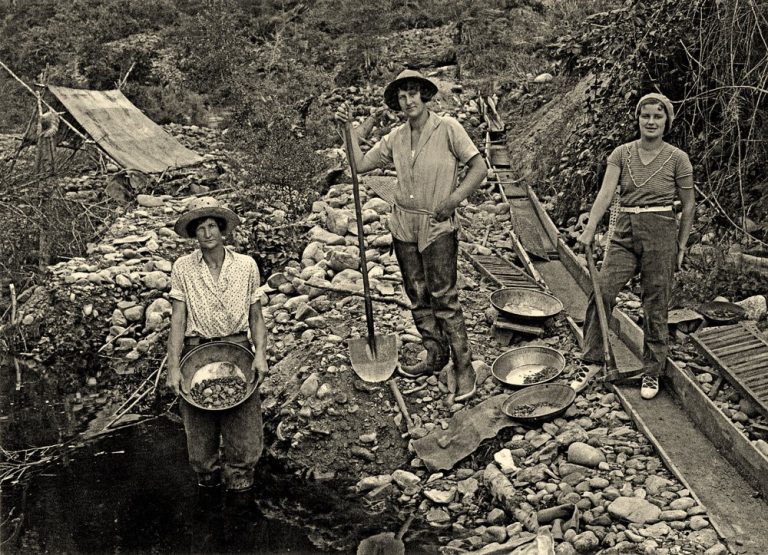
A History of Gold Mining in The Reefton Goldfield

Capelston is home to the Pactolus Vein, a new discovery within the historical Reefton Goldfield which has one ounce gold from channel sampling at surface

Exploration

Subscribe

Sign up to receive the latest news and updates from RUA GOLD delivered straight to your inbox.